.png)
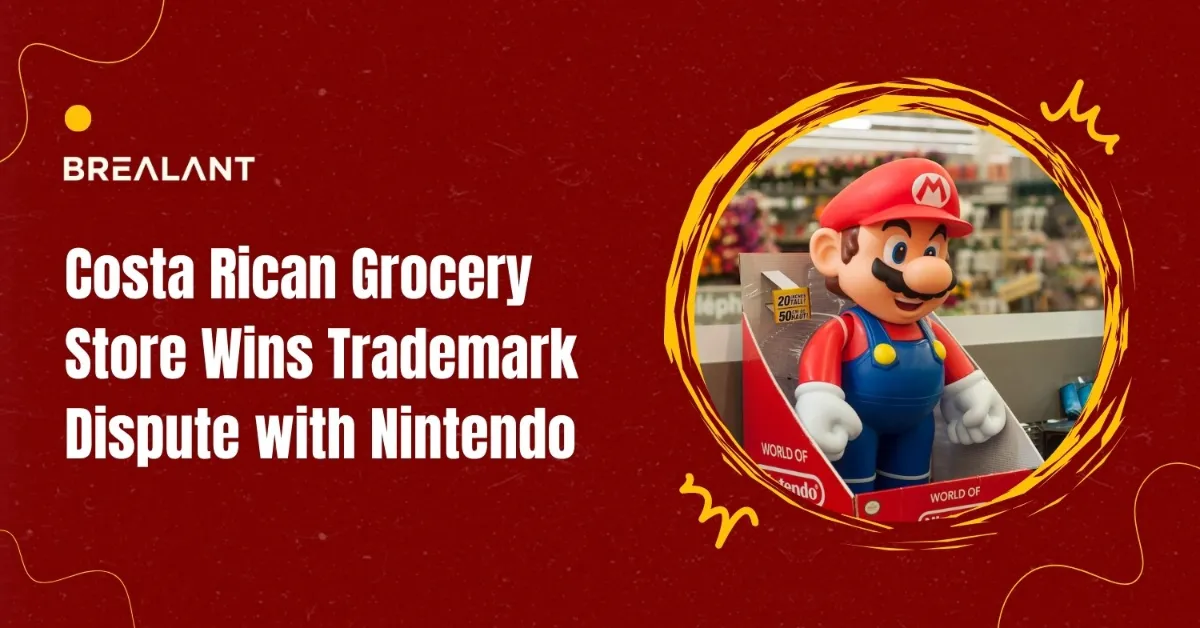

In a surprising development, a Costa Rican supermarket has won a trademark battle against Nintendo, one of the most recognizable video game companies in the world. This unusual and highly publicised case has garnered attention not only for its surprising nature but also for the broader implications it holds for trademark law and the protection of intellectual property. With both small businesses and large corporations alike now looking closely at this case, let’s dive into the details of how a Costa Rican grocery store wins Trademark Dispute with Nintendo and won.
The story began when a small grocery store, "Supermercado El Chapulín," located in Costa Rica, became embroiled in a trademark dispute with Nintendo. The dispute centered around the use of a name that Nintendo believed was too similar to its own intellectual property. Nintendo, renowned for its worldwide recognition with iconic franchises such as Mario, Zelda, and Pokémon, argued that the grocery store’s branding could create confusion among consumers, ultimately tarnishing the company's well-established image.
Supermercado El Chapulín, on the other hand, held that its trademark was unrelated to Nintendo's products and was not intended to exploit the global recognition of the Nintendo brand. The store’s logo featured an image of a cheerful, red-caped character, resembling the colors associated with the beloved Nintendo mascot, Mario. However, it was important to note that the character depicted in the store's branding was a local creation, unique to the supermarket, and distinct from any Nintendo character.
As the case made its way to court, it raised questions about trademark infringement, the protection of intellectual property rights, and the limits of corporate control over brand identity. The outcome of the case would set an important precedent for future trademark conflicts involving large corporations and small businesses.
Nintendo’s legal team argued that the grocery store’s branding could cause consumer confusion, potentially affecting Nintendo’s reputation and marketability. Costa Rican Grocery Store Wins Trademark Dispute with Nintendo being a household name around the world, the company maintained that there was a risk that consumers could mistake the grocery store for a part of the Nintendo franchise or for a Nintendo-branded business.
On the other hand, Supermercado El Chapulín’s legal team contended that there was no substantial evidence to suggest that their branding had led to any confusion among consumers. The store's logo, they argued, was not a copy of any Nintendo character, and it did not seek to capitalize on Nintendo’s fame. Moreover, they highlighted that the grocery store primarily catered to a local market, and its branding and operations were specific to Costa Rica. The grocery store's identity was distinct, and it was unlikely to influence the global reputation of a brand as massive as Nintendo.
As the case unfolded, both sides presented their arguments on the nature of the trademark, its potential to mislead consumers, and the scope of Nintendo’s global intellectual property rights. In particular, the issue of whether Supermercado El Chapulín’s trademark was too “similar” to Nintendo’s branding was at the forefront of the dispute.
After months of legal proceedings, the court in Costa Rica ruled in favor of Supermercado El Chapulín, determining that Nintendo’s claim of trademark infringement lacked merit. The court found that the grocery store’s branding was not likely to cause confusion among consumers, as it was sufficiently different from any existing Nintendo trademarks. Additionally, the court considered the fact that the grocery store was a small, local operation with no international presence that could challenge Nintendo’s market dominance.
This ruling was a huge victory for Supermercado El Chapulín, as it affirmed the importance of protecting smaller businesses against large corporations’ attempts to stifle competition using trademark claims. The case underscored that while corporations like Nintendo have extensive resources and an international presence, their trademarks do not have an all-encompassing reach over every business that may have a minor resemblance.
The court also acknowledged the principle that trademarks are meant to prevent consumer confusion, not to provide a monopoly over certain imagery or concepts. By ruling in favor of the grocery store, the court emphasized that the law should protect genuine small businesses from being intimidated by the sheer size and influence of global brands.
The victory of Supermercado El Chapulín against Nintendo has broad implications for both trademark law and the dynamics between small businesses and large corporations. It serves as a reminder that while global companies may hold massive intellectual property portfolios, smaller businesses must not be unduly burdened by legal threats based on vague or exaggerated claims of trademark infringement.
The ruling also raises questions about how far corporate trademark protections can extend. Can a company claim trademark infringement on the basis of simple visual similarities that do not lead to consumer confusion? How far can a brand control the use of its intellectual property, especially in markets where it has no direct competition?
As trademark law continues to evolve in the digital age, the legal precedent set by this case will likely influence future trademark disputes, especially in instances where a larger company challenges the branding of a smaller competitor.
In the end, Supermercado El Chapulín’s victory represents a significant moment in the ongoing debate over the balance between intellectual property protection and fair competition. While Nintendo’s attempt to enforce its trademark rights was unsuccessful in this case, it serves as a reminder of how Costa Rican Grocery Store Wins Trademark Dispute with Nintendo can be. As we’ve seen, the court’s decision protects smaller businesses from unfair legal challenges and sets a precedent for other companies facing similar trademark claims. For businesses facing similar disputes or looking to learn more about protecting their intellectual property, this case is a noteworthy example.If you are involved in a trademark dispute or need assistance with intellectual property protection, don’t hesitate to reach out.